About Pulley Taps
Pulley Taps
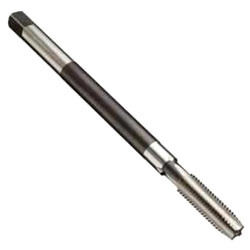
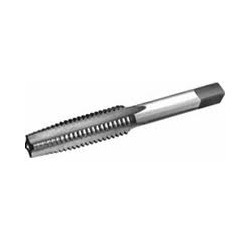
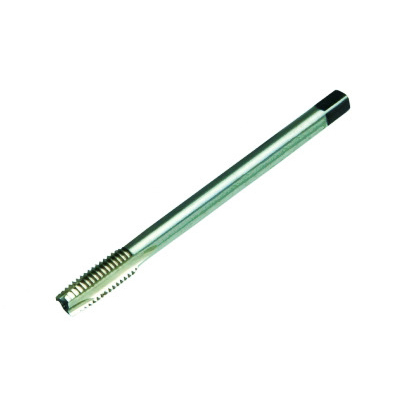
Pulley Taps create internal threads in pulley assemblies' set-screw holes. They have a long shank that allows them to reach holes that a normal tap cannot. Their thread diameter is nearly equivalent to the diameter of their shank. They are checked under various parameters to ensure their high quality and durability. Pulley Tapscan also be used for general tapping in sections that require an extra-long length to reach the holes that need to be tapped. They require very low maintenance and replacement costs.
Versatile Application RangePulley Taps PT-HSS are compatible with drilling and tapping machines and can be operated manually or by machine. Their design supports threading in pulleys, blind holes, and standard applications, handling both metric and inch thread types. These taps are ideal for a variety of industries, offering flexibility for multiple threading operations.
Precision and DurabilityManufactured from premium high-speed steel (HSS), these taps provide high cutting accuracy and strong wear resistance. Precision ground flutes and sharp edges guarantee neat threads and extended tool life, even under medium to heavy duty torque. Optional coatings further enhance durability, catering to specific production requirements.
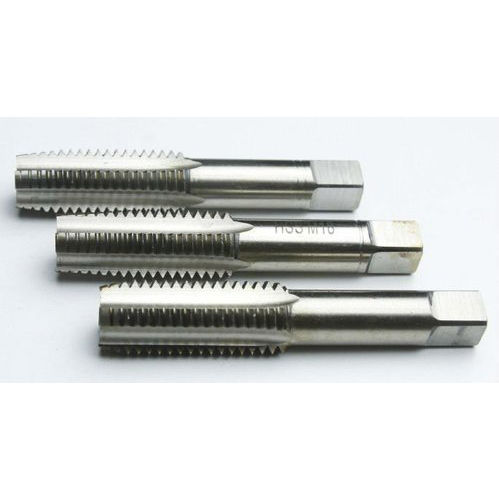
Packaging and Customization OptionsAvailable in individual plastic boxes or set packs, the PT-HSS Pulley Taps are offered in standard or customized lengths as per IS or DIN. With minimum order quantities as per supplier policy and export capability, buyers from diverse markets can easily source these taps according to their specific project needs.
FAQ's of Pulley Taps:
Q: How are PT-HSS Pulley Taps used in threading operations for pulleys and blind holes?
A: PT-HSS Pulley Taps are inserted into pre-drilled holes in pulleys or workpieces. By rotating the tap manually or via a machine, threads are accurately cut into the material, making these taps suitable for threading in confined or blind holes where standard taps may not reach easily.
Q: What materials can PT-HSS Pulley Taps process, and what is their cutting capacity?
A: These taps are engineered for threading mild steel, aluminium, brass, and cast iron. Their high cutting force and wear-resistant properties ensure effective thread cutting in both softer and relatively harder industrial materials.
Q: When should I opt for coated versus uncoated Pulley Taps?
A: Uncoated Pulley Taps with a bright finish are ideal for general-purpose use and economic performance. For increased wear resistance, heat protection, and enhanced tool life, opt for TiN/TiCN coatings, which are available upon request, especially in high-volume or demanding environments.
Q: Where can PT-HSS Pulley Taps be used and what are their application benefits?
A: These taps can be used in mechanical workshops, manufacturing units, and repair shops requiring reliable threading for pulleys, blind holes, and other components. Benefits include consistent thread precision, high torque handling, and adaptability for manual or machine operations.
Q: What is the process for selecting the correct PT-HSS Pulley Tap size and standard?
A: Select the tap diameter (between 6 mm and 20 mm) and length according to your threading requirements and matching the relevant IS or DIN standards. Consider the thread type (metric or inch) and tolerance class (2B) for optimal fit and function in threaded assemblies.
Q: How does the packaging and minimum order policy work for these taps?
A: PT-HSS Pulley Taps come individually boxed or in set packages, preserving tool integrity during shipping and storage. Minimum orders are governed by supplier policy, so it's best to check directly with the manufacturer or exporter based in India for precise order requirements.
Q: What are the main benefits of using PT-HSS Pulley Taps for threading applications?
A: Key benefits include high cutting accuracy, strong wear resistance, precise and clean threading, compatibility with both hand and machine operations, and robust performance on a variety of metals. Their versatility and precision make them essential in numerous machining and repair tasks.

 Send Inquiry



 Send Inquiry

 Send Inquiry
